

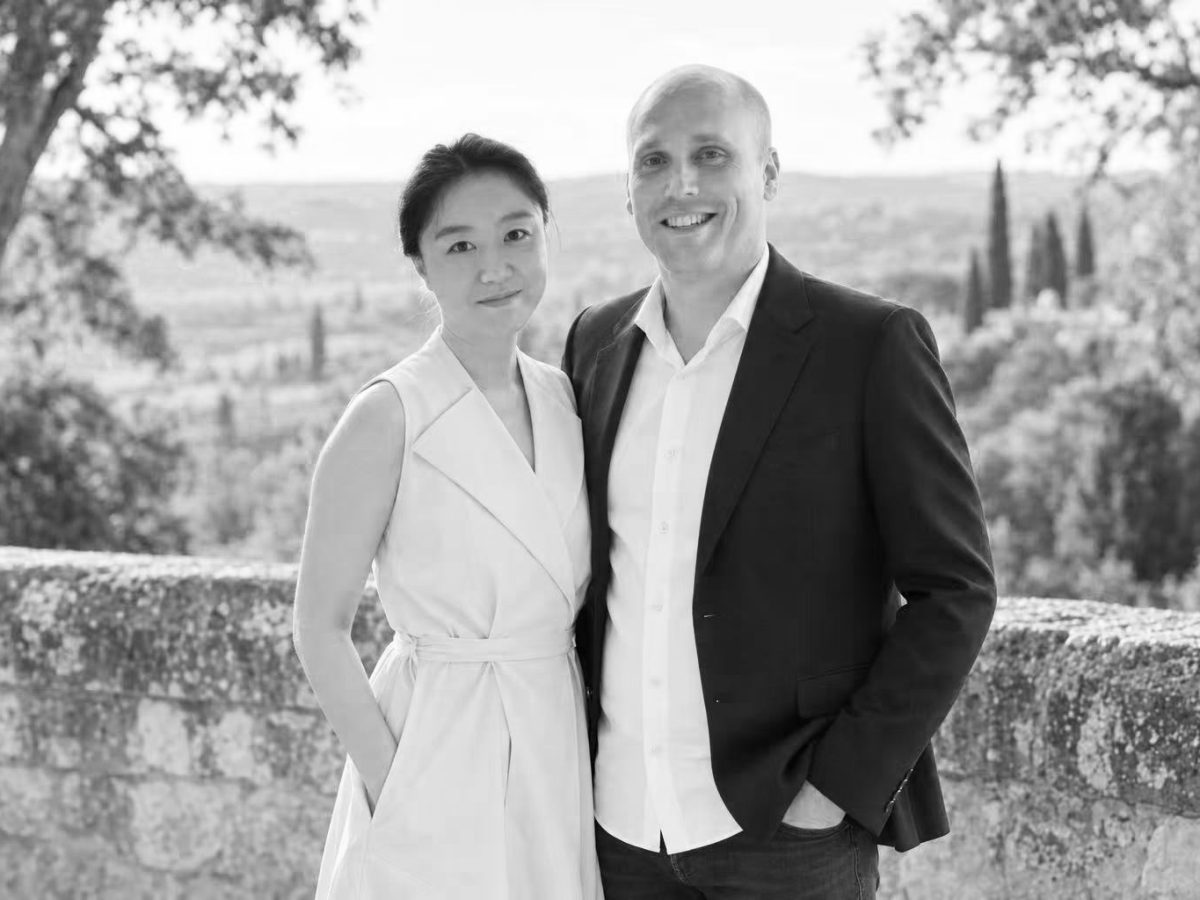
Founded by Franco-Chinese couple David Salczer and Jo Li, Aurya Brands supports perfume brands looking to expand from China into Europe — and vice versa. At the Asia Perfume Show, the company will present five Chinese fragrance houses, each with a very different creative universe.
How would you describe Aurya Brands in a few words?
Above all, Aurya Brands is a bridge between Chinese and European perfumery — one that we cross in both directions. We select Chinese fragrance houses and support their entry into the European market, from import and regulatory compliance to introductions to retailers and distributors.
In the other direction, we also help European brands looking to expand into China, enabling them to better understand the market, register their products and establish a local presence.
Aurya was also born out of a genuine passion for perfume. Jo has been collecting fragrances since 2012 and now owns around 1,500 bottles. Over the years, this passion has given her an in-depth knowledge of perfumes, brands and the Chinese market, complemented by her professional experience selling fragrances in China. David, meanwhile, brings his knowledge of the European market and leads Aurya’s development in Europe.
Our role therefore goes far beyond simply distributing brands. We also need to ensure that a Chinese fragrance house is understandable and relevant to a European buyer — and vice versa.
Why did you decide to take part in the Asia Perfume Show, and what are you hoping for from this first edition?
Until now, European professionals curious about Chinese perfumery have had very few opportunities to discover it under the right conditions. The brands exist and the creative work is there, but access remains complicated. Distribution is fragmented, European regulations are demanding, and buyers often lack a local contact capable of bridging the gap between the two markets.
The Asia Perfume Show creates precisely this meeting point in Paris. For the houses we represent, it is an opportunity to meet European professionals and, above all, to be judged first and foremost on their fragrances rather than through preconceived ideas about their country of origin.
We also want to see how European professionals respond to the diversity of contemporary Chinese perfumery, because there is no single movement or aesthetic. Some houses place a strong emphasis on storytelling and design, while others draw more directly on materials, philosophies or practices rooted in Chinese culture.
If there is one idea we would like this first edition to convey, it is this: what makes a Chinese perfume interesting should no longer simply be the fact that it is Chinese.
Which fragrance houses will you be presenting in Paris?
We will be presenting five houses, each with a very different creative language.
Cottee will have its own dedicated space, designed as a small photographic exhibition around Traveler’s Plan. The collection brings together nine fragrances conceived as pages from a travel journal, each associated with a particular place, from Bayanbulak to Jeju.
Ebers Papyrus takes its name from the Ebers Papyrus, a renowned ancient Egyptian medical text that notably mentions the use of aromatic plants. The brand draws inspiration from history, literature and influential women who left their mark on their time.
Outis builds its fragrances around the five elements of Chinese thought and their correspondences within traditional Chinese medicine.
Voice from the Sky, founded by Chinese perfumer Feng Tianle, approaches fragrance as a personal olfactory journal. Each creation seeks to capture an intimate, emotional or spiritual moment, exploring themes such as faith, memory and inner reconciliation.
Finally, To Define sees perfume as a new form of language, capable of expressing identity, relationships and everyday emotions.
These five houses share the same country of origin, while exploring remarkably diverse creative territories.
How do you see Chinese perfumery evolving today?
What strikes us most is the growing confidence of young Chinese fragrance houses and the freedom with which they define their creative territory. They no longer necessarily feel the need to express their Chinese identity in the same way.
Outis draws directly on Chinese internal alchemy, while Cottee builds its universe around travel and the memory of places. Ebers Papyrus takes a distinctly more historical approach, with references to ancient Egypt, European literature and influential female figures.
We believe this diversity is essential. Above all, it shows that Chinese perfumery is becoming increasingly difficult to define by geographical origin alone.
If you had to sum up Paris and the Asia Perfume Show in a single word?
A bridge. It is the word that best defines Aurya Brands, and for three days, the Asia Perfume Show will give us the opportunity to make that idea tangible.


